BIOLOGY MOCK EXAM QUESTIONS FOR SS3
SS3 BIOLOGY MOCK EXAM QUESTIONS –EDUDELIGHT.COM
MOCK EXAMINATION
Examination malpractices may lead to a repeat of the subject or suspensions don’t be involved.
SUBJECT: BIOLOGY TIME ALLOWED: 2HRS. 30MINS CLASS: S.S 3
1.The study of plant is called A.botany B.entomology C.parasitology D.zoology
2.Which of the following is not a characteristics of living things? A. expansion B. feeding C.growth D.reproduction
3.Which of the following is a saprophyte? A.fern B.hydra C.mushroom D.paramecium
4.The basic unit of classification is the A.class B. genus C.kingdom D.species
5.The excretory structure in earthworm is called A.anus B. flame cell C.kidney D. nephridium
6.Which of this animals is an_____ in vertebrate? A. lizard B.rat C.starfish .D.tilapia fish
7.An example of a radially symmetrical organism is A. amoeba B. hydra C.planaria D.tapeworm
8.The deficiency of vitamin D in the diet of man leads to A. anaemia B.beri-beri C.ricket D.scurvy
9.Which of the following is the end product of digestion of oil? A. amino acid B.fructose C. glycerol D.maltose
10.The coiled mouthparts of a butterfly is called A.labrum B.palps C.proboscis D.stylet
11.The instrument used for measuring wind speed is A. anemometer B.barometer C.hydrogen D.rain guage
Carefully study the diagram below and use it to answer questions 12 and 13

12. Gaseous exchange occurs in the part labeled A.I B.II C . III D.IV
13.The part labeled VI is used for A.excretion B.locomotion C.nutrition D.respiration
14. Deoxygenated blood is transported to the lungs through the A.hepatic portal vein B.pulmonary artery C.pulmonary vein D.renal artery
15.The part of the eye which transmits impulse to the brain is called A.blind spot B.conjunctiva C.cornea D. optic nerve
16.Which class of fruit does the diagram represents A. achene
B. berry C.cypsela D. drupe
17. The part labeled II is called A. endosperm B. endocarp C. mesocarp D.seed
18.The following are examples of sex linked characters except A.albinism B.baldness C.colour blindness D. dwarfism
The diagram below is a tissue map of a section of a herbaceous plant. Use the diagram to answer questions 19 and 21.

19 The diagram above is a transfverse section of a A.diacoytledonous root B.diacoytledonous stem C.monocoytledonous root D.monocotyledonous stem.
20.Efficient gaseous exchange occurs in the part labeled A. I B.II C.III D. IV
21.Which of the labeled part stains red when placed in eosin solution? A. I B. II C.III D. IV


22.Which of the following factors in an ecosystem is a decomposer? A. green plants B. sun C. bacteria D. herbivore
23.An air pollutant that damages plant is A. insecticide B. fertilizer C. sulphur dioxide D. sewage
24.Individual with blood group AB can donate blood to individuals with blood groups A .A and B B. A and O C. AB only D. O only.
25.The term variation is used to describe organisms A.feeding on different type of food B.showing different traits from each other C .which resembles their parents D. living in different habitats
26.If a woman with blood group O is married to a man of blood group AB then A.all their children will be blood group (B) .half of the children will be blood group AB and half will be blood group O C. all the children will be blood group O D.some of their children will belong to blood group O
27.A cross between a pure- bred black mouse and a pure-bred white mouse takes place where black colour is dominant over white colour and F1 generation is selfed. The phenotyptic ration of F2 will be A. 1:2:1 B.2;1: C. 3:1 D. 1:1:2
28.A blood group A accident victim who needs blood transfusion has no rhesus factor antigen in his blood.What type of blood can be transfused A. A+, O+ B. A+, O– C.AB–, O– D. A–, O–
29. Two alternate forms of the same gene are known as A. alleles B. genotype C.heterozygote D.phenotype
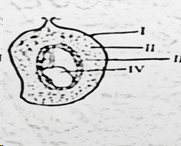
Use the diagram below to answer the questions 30 and 31

30.The part labeled V is the A. amniotic cavity B. cervix C. foetus D. uterus
31.The part that protects foetus from damage is A. I B. II C.III D.IV
32. Which of these is present in both plant and animal cell? A.cell membrane B. cell sap C. cell wall D. chloroplast
33.Snails belong to the phylum A. annelida B. arthropoda C echinodermata D. mollusca
34. The enzyme present in the saliva is called A. lipase B.pepsin C. ptyalin D. trypsin
35.Which of the following is not a part of an eye? A. cochlea B.conjunctiva C.cornea D.iris
Use the diagram below to answer questions 36 and 38

36. The vertebra illustrated in the diagram above is A. caudal B.cervical C.lumbar D.thoracic
37.The part labeled III is called neural arch B.neural canal C.neural spine D.transverse process
38.The function of the part labeled II is for A.articulation with the muscles B.articulation with the next bone below C. passage of spinal cord D. passage of vertebrarterial canal
39.Which of the following is not a berry? A.coconut B. guava C.pawpaw D. pepper
40.The theory of “use and disuse” of body part was propounded by A.Carl Linneaus B.Charles Darwin C.Gregor Mendel D.Jean Lamarck
41.The knowledge of heredity and variations are not required in A. blood transfusion B crime detection C. determination of paternity D. longevity
42.Which of the following animals exhibit basking? A.cat B.cow C.duck D.lizard
43.The part of the male reproductive system that stores sperm is A. cowsper”s gland B.epididymis C.prostate gland D.seminal vesicle
45.The growth that occurs at the tip of shoot and root is called A.allometric B.apical C.isometric D.primary
46.Carnassial teeth are found in A.dog B. cow C.goat D.man
47.Which of the following bones is not a part of axial skeleton? A. backbone B.limbs C.ribs D. skull
Use the diagram above to answer48

48. The type of variation illustrated is A .continuous variation B. discontinuous variation C. morphological variation D. environmental variation
Use the diagram above to answer questions 49 and 50

49.The part labeled I is the A. cilium B. ectoplasm C .pellicle D .protoplasm
50.The part labeled III is used for A. digestion B. excretion C. locomotion D. osmoregulation
SS3 BIOLOGY MOCK EXAM QUESTIONS –EDUDELIGHT.COM
THEORY ; Answer two question in Part I, number 4 is compulsory plus any other one.
1a.List three forms in which cells exist (3mk)
ii.Give one example each of the forms listed in (ai) (3mk)
b.Make a diagram 6cm—10cm long of typical plant cell and label fully (8mk)
ci.In tabular form, state three differences between a plant cell and animal cell (3mk)
ii. State three similarities between a plant cell and an animal cell (3mk)
2a. In sequence, name the organs that constitute the alimentary canal of humans (6mk)
b. State
i. t hree structural differences
ii.three structural similarities
between the alimentary canal of a bird and human (6mk)
c.Explain briefly how the dentition of herbivore is adapted for feeding (6mk)
d.State two roles of the pancreas in digestion (2mk)
3ai..What is a habitat? (2mk)
ii.Explain briefly three roles of a decomposer in an ecosystem (3mk)
b.Exlpain briefly energy flow in a fresh water habitat (6mk)
ci State three harmful effects of microorganism to plant (3mk)
ii. State six beneficial effects of microorganisms to humans (6mk)
4ai. Explain the term agglutination as used in blood transfusion (3mk)
| Recipients | |||||
| Donors | A | B | AB | O | |
| A | |||||
| B | |||||
| AB | — | ||||
| O | + |
Ii The table below represents blood transfusion between blood donors and recipients.
Copy and complete the table using the keys(+) to represent compatibility and (-) to represent
compatibility.(7mk)
b.Explain how each of the following organisms are adapted for obtaining food
i.Mosquito larva;
ii. Dodder;
Grassland (10mk)
SECTION B :ANSWER ONLY ONE QUESTION IN THIS SECTION
5a.State two differences between tactic and nastic movement in plants (2m
b.Give two examples each of organisms that show
i.tactic movement
ii. nastic movement (4mk)
ci.State three ways of the mammalian skin (3mk)
ii.List three stimuli to which mammalian skin is sensitive (3mk)
d. State five effects of high temperature(5mk)
ei.What is courtship behaviours in anmals?(3mk)
ii.List three courtship behaviours in animals(3mk)
f. Name three organisms that carry out holozoic mode of nutrition(3mk)
g.Explain briefly how fingerprinting can used to detect crime (4mk)
SS3 MOCK PRACTICAL
TIME ALLOWED.2hrs
1a.Name the location of each of specimens A, B and D in the body of a mammal
A………………………………………………………………………………………………………………………
B…………………………………………………………………………………………………………………………..
D…………………………………………………………………………………………………………………………(3mk)
b (i).Name the fluid in the specimen C……………………………………………………………………..(1mk)
ii. State two functions of the fluid named in (bi) above
……………………………………………………………………………………………………………………………………………………………………………………………………………………………………………………………………………………………………………………………(2mk)
iii. Which of the other specimen is specimen associate with? ……………………………………………………(1mk)
ci. State two observable differences between specimen A and B
………………………………………………………………………………………………………………………………………………………………………………………………………………………………………………………………………………………………………………………..(2mk)
ii. State observable of specimen B that adapt it to its function
…………………………………………………………………………………………………………………………………………………………………………………………………………………………………………………………………………………………………………………………..(4mk)
d. State two biological importance of specimens B and D
B………………………………………………………………………………………………………………………………………………………
.D…………………………………………………………………………………………………………………………………………………..(2mk)
e.Make a drawing, 8cm—10cm long of specimen D.(10mk)
Study specimens E and F and answer the questions below
2ai.Name the habitats of each of specimens E and F
E……………………………………………………………….F……………………………………………………….(2mk)
ii. Name the class to which each of the specimens belong
E……………………………………………………………………F…………………………………………………………(4mk)
bi. State five observable similarities between specimens E and F
…………………………………………………………………………………………………………………………………………………………………………………………………………………………………………………………………………………………………………………………………..
………………………………………………………………………………………………………………………………………………………………………………………………………………………………………………………………………………………………………………………………………………………………………………………………………………………………………………………………………………………………(5mk)
ii. State four observable differences between specimens E and F
| Specimen E | Specimen F |
(4mk
ci. Identify the sex of specimen F…………………………………………………………………………………………………..(1mk)
ii. State two reasons for the answer in (ci) above
……………………………………………………………………………………………………………………………………………………………………………………………………………………………………………………………………………………………………………………………(2mk)
d. State four observable features that adapt specimen E
…………………………………………………………………………………………………………………………………………………………………………………………………………………………………………………………………………………………………………………………………………………………………………………………………………………………………………………………………………………………………………………………………………………………………………………………………………………………………………………………………(8mk)
e. Construct a food chain at least using three of the given specimens(4mk)
3ai.Identify specimens G, H and I
G………………………………………………………….H……………………………………………………..I…………………………………………(3mk
ii. Make a well labeled diagram (8—10cm) long of the dorsal view of specimen H (8mk)
iii. State four observable differences between specimen H and I
| Specimen H | Specimen I |
(4mk)
Bi .Identify specimens J, K and L
J………………………………………K……………………………………………………L………………………………………………(3mk)
ii. Name the class to which specimens J, k and L belong
J………………………………………….K……………………………………….L………………………………………………….(3mk)
iii. Give three similarities and two differences between specimens J and L
Similarities……………………………………………………………………………………………………………………………………………………………………………………………………………………………………………………………………………………………………………………………………………………………………………………………………………………………………………………………………………………………..(3mk)
Differences
| Specimen J | Specimen L |
(2mk)
iv. State two agents of dispersal of specimen J, K and L
J…………………………………………………………………………………………………………………………………………………………………K……………………………………………………………………………………………………………………………………………………… L…………………………………………………………………………………………………………………………………………(3mk)
v.State the placentation of specimens J and L
J…………………………………………………………L…………………………………………………………………..(2mk)
SS3 BIOLOGY MOCK EXAM QUESTIONS –EDUDELIGHT.COM


Please what is the specimens for biology SS3 mock practical 2019
Periplaneta americana
(Cockroach)
Adegbayi ADZ1
Periplaneta americana
(Cockroach)